Agents visual guide
A verifiable multi-agent handoff
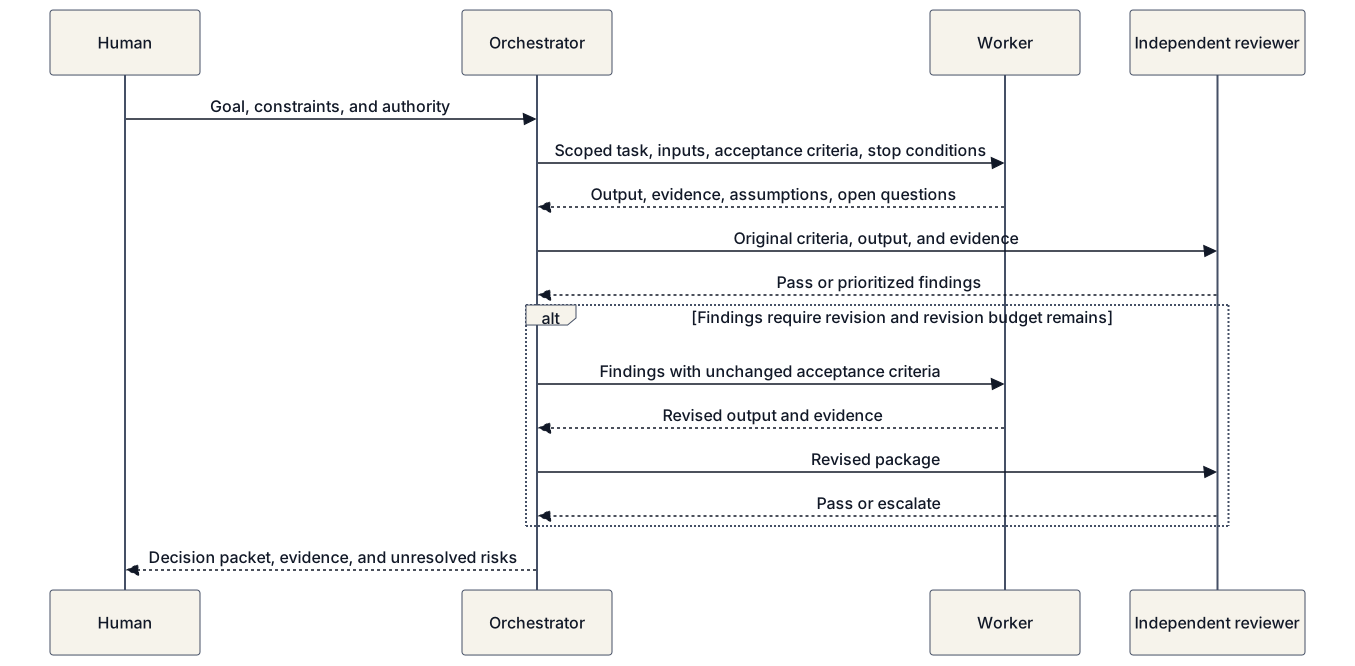
How scoped context and evidence move between an orchestrator, worker, independent reviewer, and human.
Read the visual
What this shows
Parallel agents are useful only when their contracts are explicit. The orchestrator sends a bounded task with inputs and acceptance criteria, the worker returns outputs and evidence, an independent reviewer evaluates the result, and the human receives a concise decision packet with unresolved risks.
Carry this forward
Key takeaways
- Every handoff needs scope, inputs, outputs, acceptance criteria, and stop conditions.
- The reviewer needs the original task and evidence, not just the worker's summary.
- Bound revision loops and escalate unresolved disagreements to a human.